AC Freon Recharge: What You Need to Know (R32 vs R410A)
If your AC “needs gas every year”, you don’t have a recharge problem — you have a leak. Here’s how refrigerant really works, the difference between R32 and R410A, and how it’s done right.
“It just needs a gas top-up” is one of the most common — and most misleading — things people are told about a weak air conditioner. A sealed AC system shouldn’t lose refrigerant at all, so if yours is low, something is leaking. Here’s the truth about freon recharges, the difference between R32 and R410A, and why finding the leak matters more than refilling it.
A sealed system shouldn’t lose gas
Refrigerant isn’t a fuel that gets used up — it circulates in a closed loop and stays there for the life of the unit. So if your AC needs topping up every season, it isn’t “consuming” gas; it has a leak somewhere in the coils, joints or pipework. Simply refilling it hides the problem and lets the leak get worse.
It’s also bad value: you pay for gas that escapes within months, and running a system low on refrigerant strains the compressor — the most expensive part to replace.
R32 vs R410A — what’s the difference?
R410A was the standard refrigerant in split systems for years. R32 is the newer gas now used in most modern units: it cools more efficiently, you need less of it, and it has a far lower environmental impact, which is why the industry is moving to it. Neither is “better” for a given unit — your AC is designed for one specific refrigerant, printed on the outdoor unit’s label.
They can’t be mixed or swapped freely. A technician must use the exact refrigerant your unit is rated for and charge it to the manufacturer’s weight — guessing the amount harms efficiency and the compressor.
How a recharge is done properly
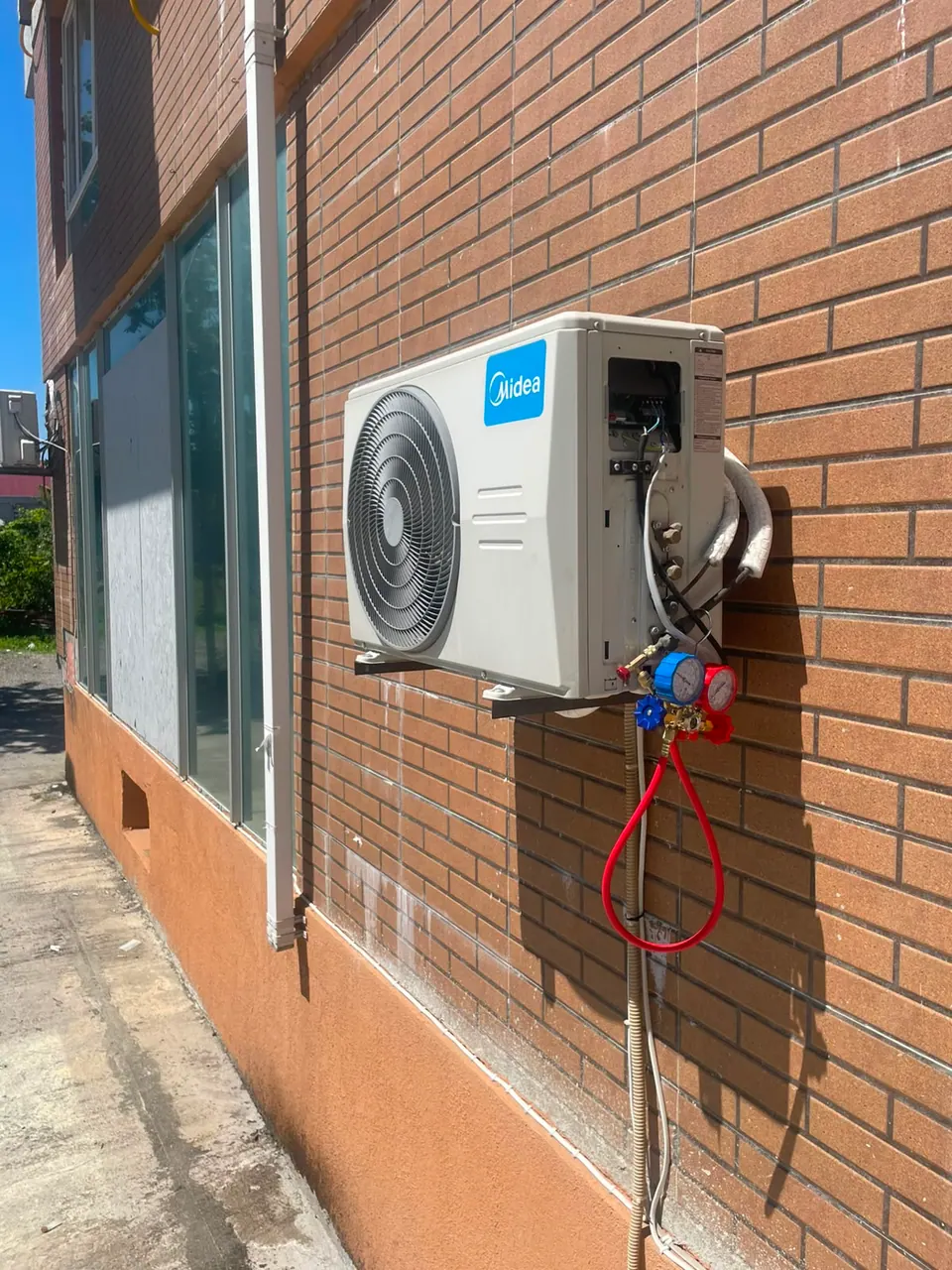
A correct job is never just “connect a bottle and fill”. The technician first finds and seals the leak — electronic detector and pressure testing — then vacuums the system to remove air and moisture, and only then charges the exact weight of the correct refrigerant the unit specifies. That’s the difference between a fix that lasts and a refill you’ll repeat next year.
Charging by guesswork or skipping the vacuum is how units end up under- or over-charged, cooling poorly and wearing out early.
Signs you have a leak — not a recharge need
Tell-tale signs of low refrigerant: weak cooling, ice forming on the thin copper pipe or the outdoor valves, a hissing or bubbling sound, and cooling that fades a few weeks after the last “top-up”. If any of these sound familiar, the gas isn’t the problem — the leak is.
We find the leak, seal it, vacuum and recharge to spec, so the gas stays where it belongs. In Batumi you get a clear diagnosis and a fixed quote before any work — never a vague “it needs gas”.
Frequently asked questions
How often should an air conditioner need a refrigerant top-up?
Never, in normal operation — the circuit is sealed and refrigerant is not consumed. Needing gas every season means there is a leak, and each top-up without a repair is money spent twice. Imia pressure-tests and traces the leak first, then recharges by weight at 15 GEL per 100 grams.
Can R410A be replaced with R32 in the same unit?
No. The refrigerants run at different pressures and use different oils, so a unit designed for R410A must be recharged with R410A. Mixing or substituting refrigerants damages the compressor and voids any warranty. Check the outdoor unit rating plate, or send Imia the model number and we will confirm it.
How much refrigerant does a home air conditioner hold?
A typical 9,000–12,000 BTU domestic split holds roughly 700–1,200 grams, and the exact factory charge is printed on the outdoor unit rating plate. At 15 GEL per 100 grams, a full recharge on a small unit is straightforward to price once the charge weight and the pipe run are known.