If your air conditioner needs topping up every season, the refrigerant is leaking — adding more gas only hides the problem. Common signs are weak cooling, ice forming on the pipes, a hissing sound or oily residue around the joints. We find the actual leak instead of masking it.
What's included
- Electronic leak-detector sweep of joints, flares and coils
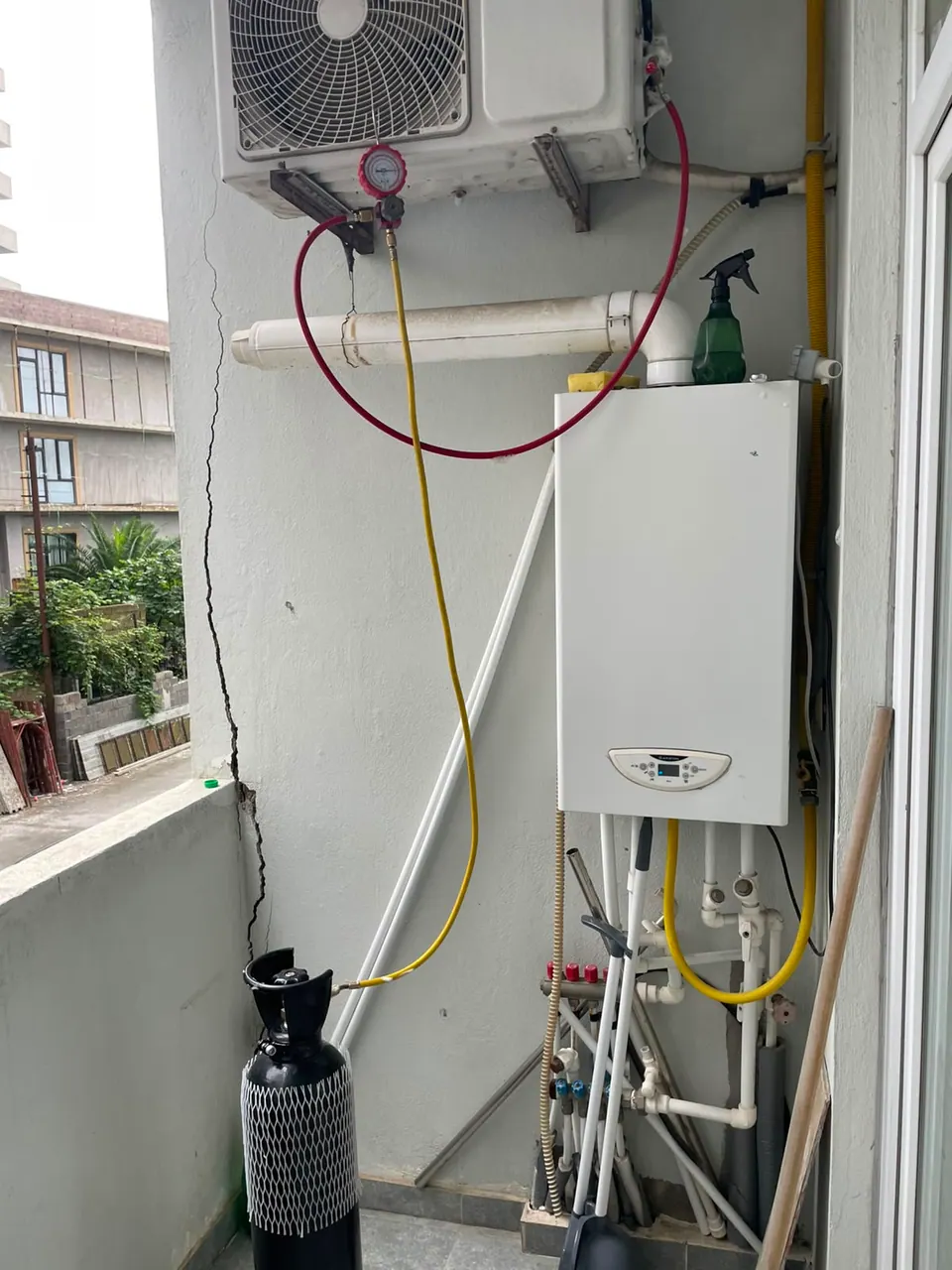
- Nitrogen pressure test to confirm and pinpoint the leak
- UV dye tracing where a leak is slow or hidden
- Sealing or remaking the faulty joint or flare
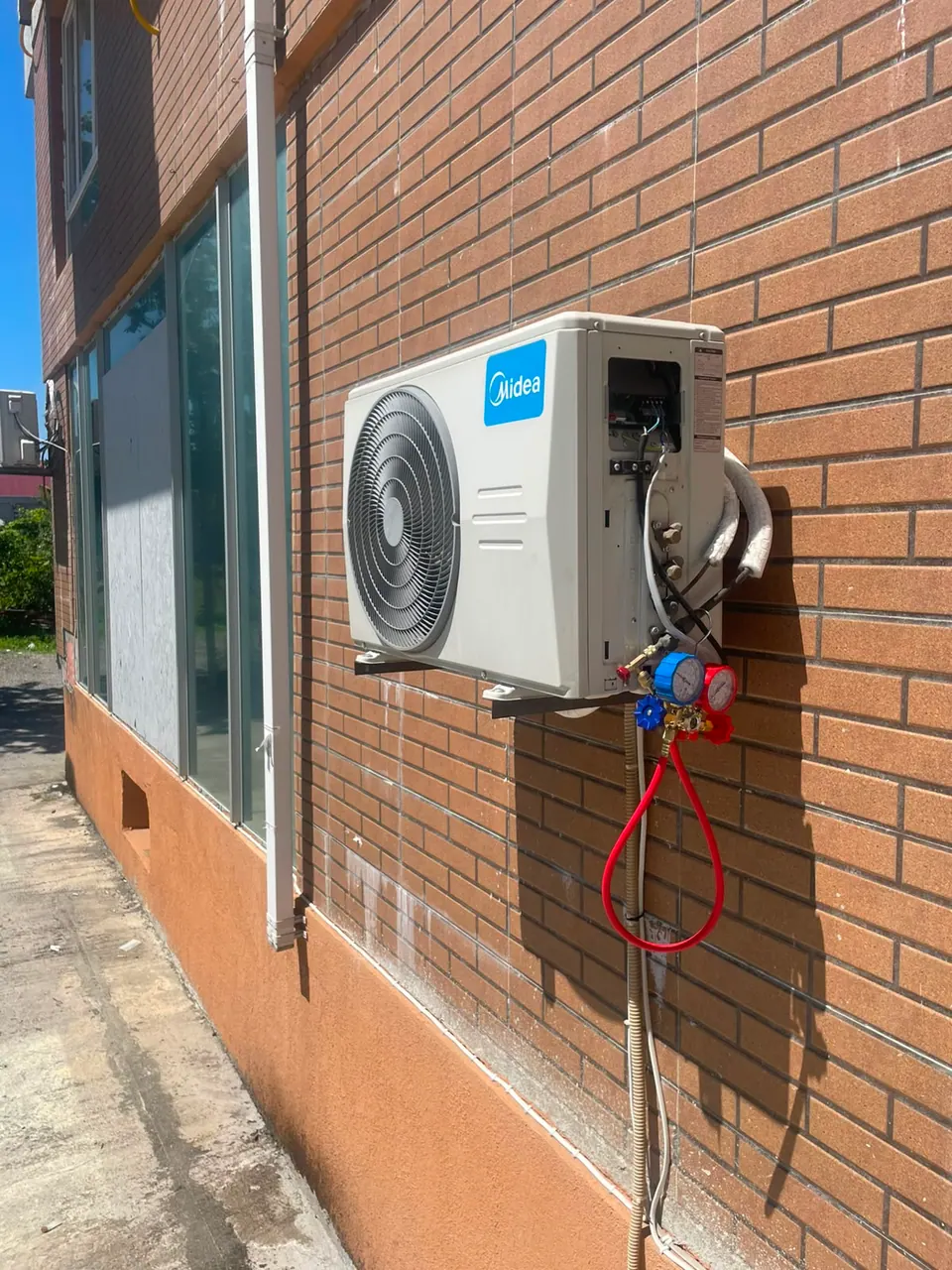
- Vacuum evacuation to remove moisture and air
- Recharge with the correct refrigerant to the manufacturer’s spec
You get full cooling back and an end to repeat top-ups — with a clear quote before any repair.
Refrigerant top-up
Finding the leak is quoted after the details are known; the refrigerant itself is charged by weight. The cost depends on the refrigerant type (R22 / R410A / R32), the amount needed and the condition of the system — measured on site.
- Refrigerant (freon) top-up15 ₾/ 100 g
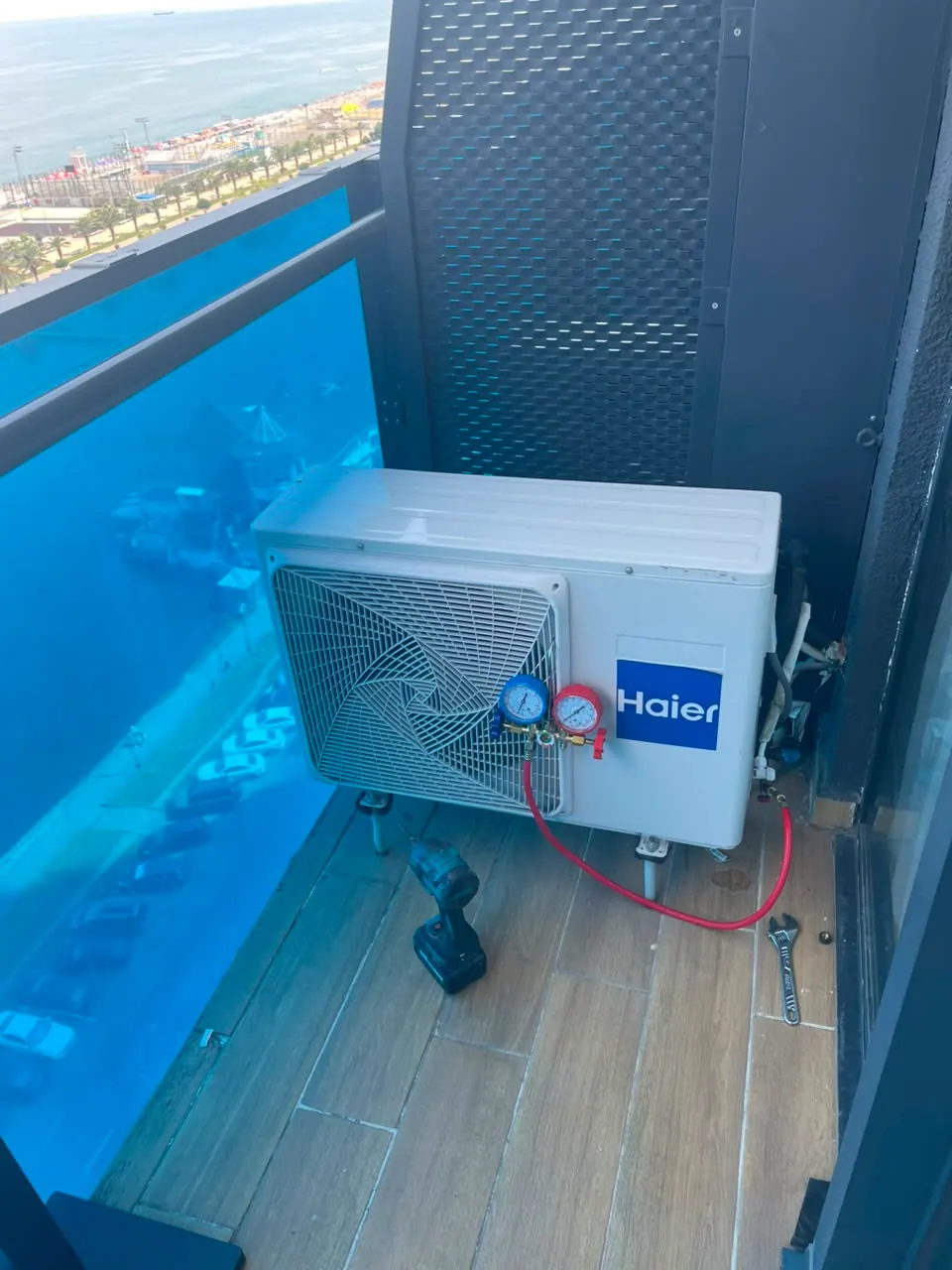
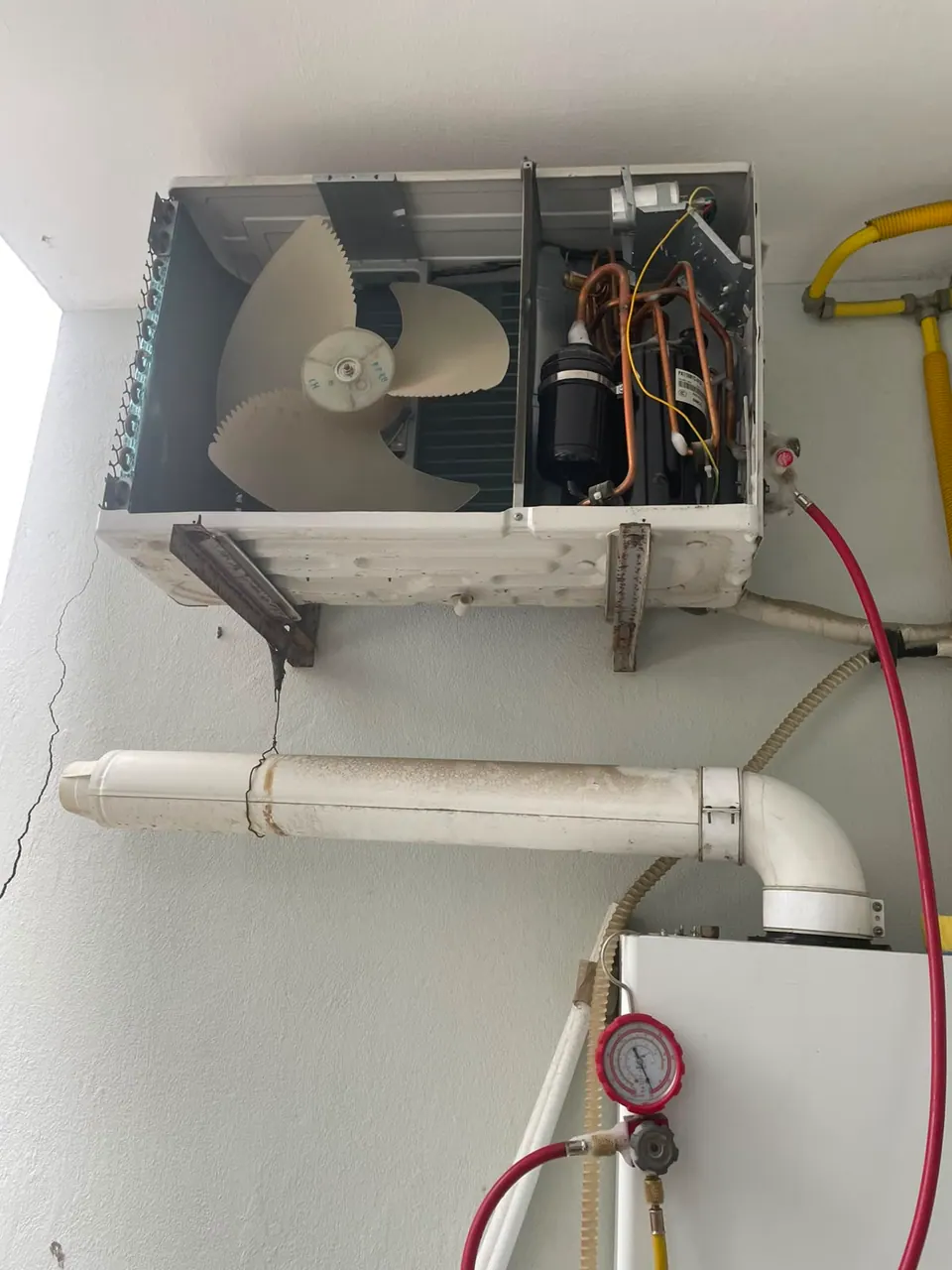
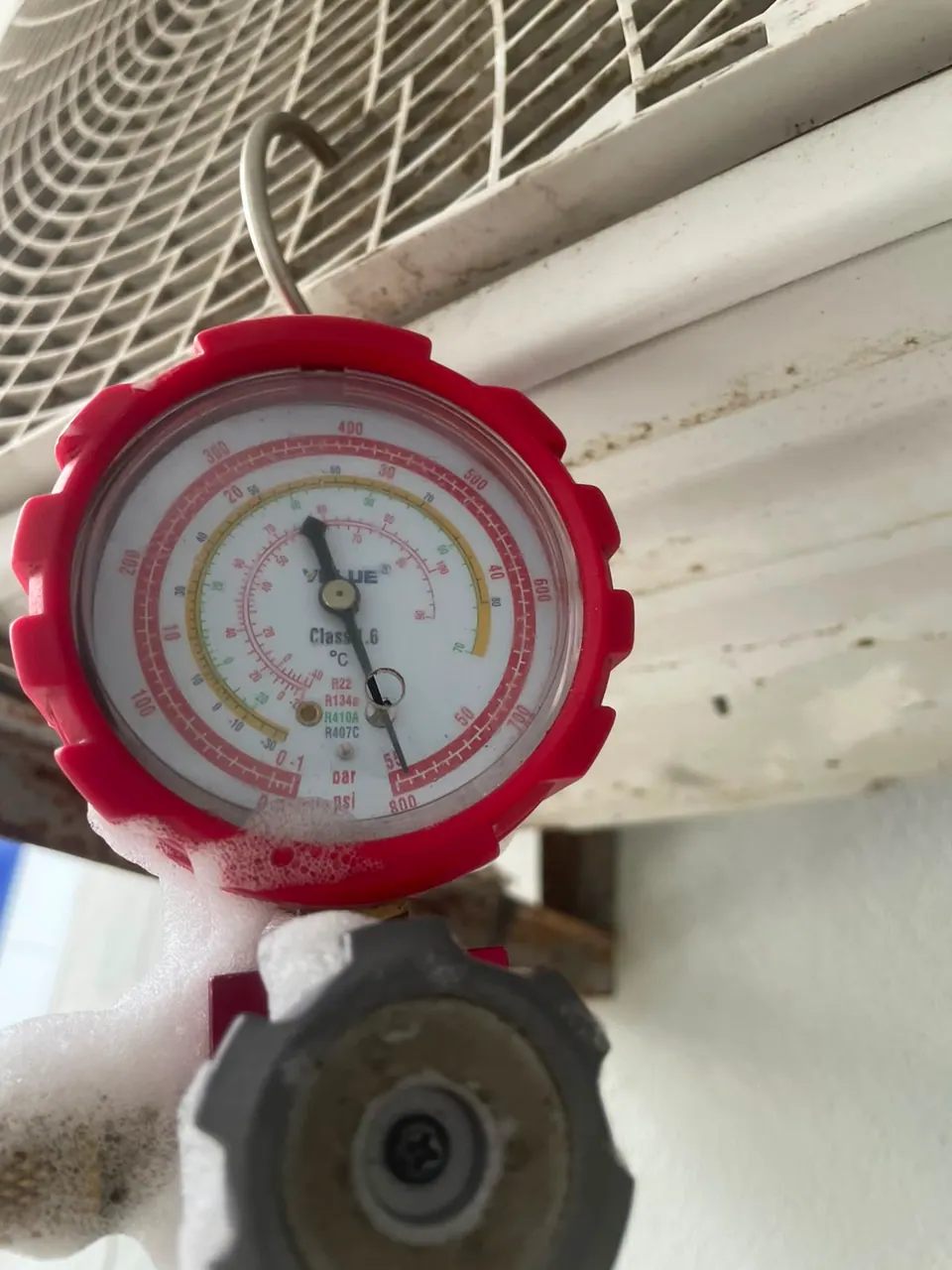
Recent work
Frequently asked questions
How do I know my air conditioner is low on freon?
The classic signs are cooling that has slowly got weaker, ice forming on the copper pipes or the indoor coil, a hissing or bubbling sound, and the unit running non-stop without reaching the set temperature. A sealed system does not consume refrigerant, so if it is low there is a leak. Imia finds it in Batumi from a call-out.
How much does a freon top-up cost in Batumi?
Imia charges 15 GEL per 100 grams of refrigerant. The total depends on the refrigerant type (R22, R410A or R32), how much the system needs and its technical condition, which is measured on site. Finding the leak itself is quoted separately once we know the system type and the scope of work.
Which refrigerant does my air conditioner use — R22, R410A or R32?
It is printed on the outdoor unit rating plate. Units older than roughly 2012 usually run R22, which is being phased out; most units sold in Georgia since then use R410A, and current models use R32. The three cannot be mixed — each needs its own gauges and charge weight. Imia works with all three.
How do you find a refrigerant leak?
Imia pressure-tests the system with dry nitrogen and traces the circuit with an electronic leak detector, checking the usual failure points first: flare joints, the service valves, the indoor coil and the outdoor condenser. You are shown exactly where the leak is before anything is repaired, then the system is sealed, vacuumed and recharged by weight.
Can you just top up the gas without finding the leak?
We can, but it is money thrown away — the same refrigerant will escape again within weeks or months, and running low on charge is what kills compressors. Imia always recommends finding and sealing the leak first, then recharging by weight. That way the repair holds and the compressor is protected.
How long does leak detection and a recharge take?
A straightforward flare-joint leak on a domestic split system is usually found, sealed, vacuumed and recharged in one visit of two to three hours. A leak inside a coil, or a fault on a multi-split or VRF system, takes longer and may need a part. Imia gives you a fixed quote before any repair work starts.
Is it worth repairing an old R22 air conditioner?
Often not. R22 is phased out, increasingly expensive and hard to source, so a leaking R22 unit can cost more to keep alive than it is worth. If the unit is over ten years old and losing gas, Imia will tell you honestly whether a repair or a new R32 system is the better spend — replacing an old unit costs 80–100 GEL.