Why Does Your Air Conditioner Smell Bad?
A musty, sour or “dirty socks” smell when the AC starts is mould being blown into your room. Here’s what causes the different odours and how each one is fixed.
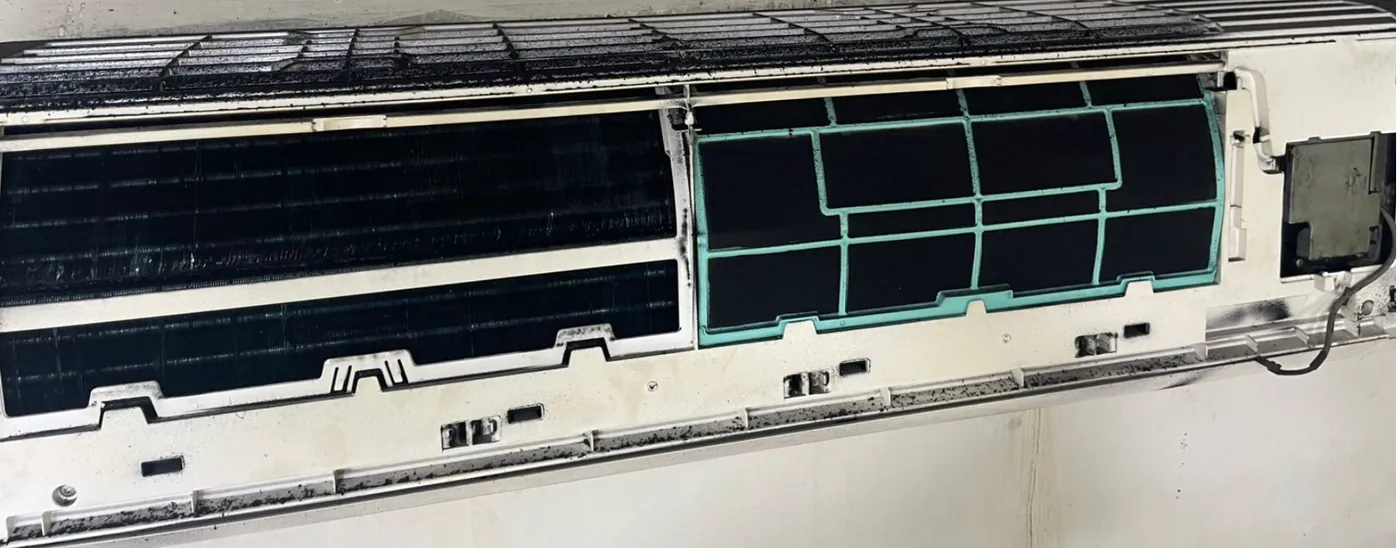
You switch the AC on and a musty, sour smell fills the room. It’s one of the most common complaints we get in Batumi — and in our damp coastal climate it’s no surprise. That smell isn’t just unpleasant; it’s usually mould and bacteria living inside the unit and blowing into the air you breathe. Here’s what the different AC smells mean and how to get rid of them for good.
Musty or sour — the “dirty socks” smell
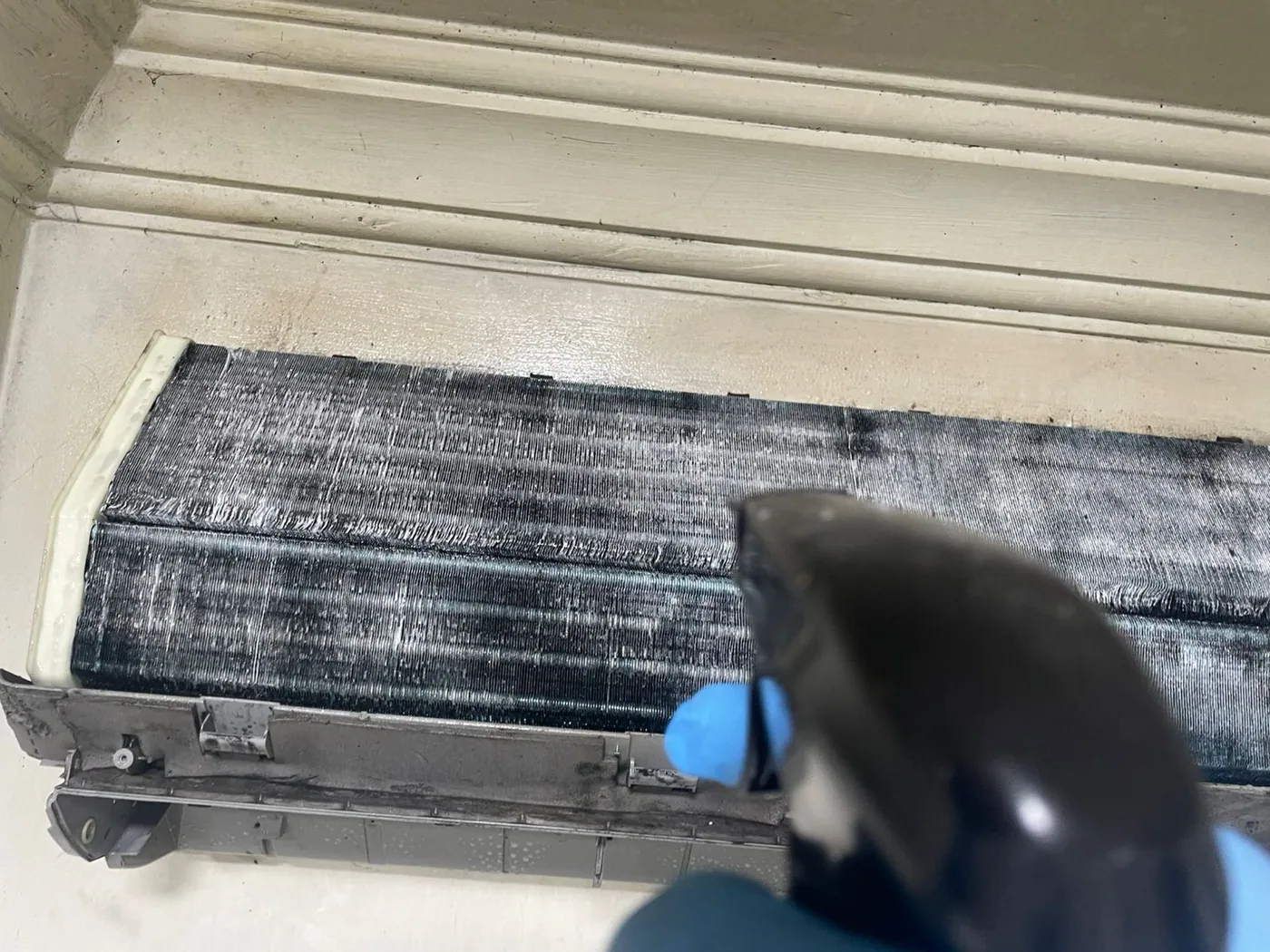
The classic musty, sour AC smell comes from mould and bacteria growing on the damp coil and in the drain pan inside the indoor unit. Batumi’s humidity keeps that space permanently wet and dark — perfect conditions for mould. Every time the fan starts, it blows those spores and the smell straight into the room.
A filter rinse won’t fix it because the growth is deeper, on the heat exchanger and blower drum. It takes a proper deep clean to remove and sanitise those parts — which is also what stops the smell coming back.
Why it matters for your health
A mouldy air conditioner isn’t just a comfort issue. Blowing mould spores and bacteria around a closed room can irritate airways, trigger allergies and worsen asthma — especially for children and anyone sensitive. If the room smells worse when the AC runs, the unit is the source, not the cure.
In a humid city like ours this is common, and it’s exactly why a once-a-year deep clean matters more here than in a dry climate.
Other smells: vinegar, burning, rotten eggs
A sharp vinegar smell often points to mould or excess condensate, sometimes with electrical components involved — worth a check. A burning or hot-plastic smell is more serious: switch the unit off, as it can mean an electrical fault or an overheating motor that needs a technician immediately.
A rotten-egg or gas smell is rarely the AC itself — treat any gas smell in the room as a safety issue first. And a one-off dusty smell when you first run the AC after winter usually clears in a few minutes; if it lingers, the unit needs cleaning.
How to fix it and keep it gone
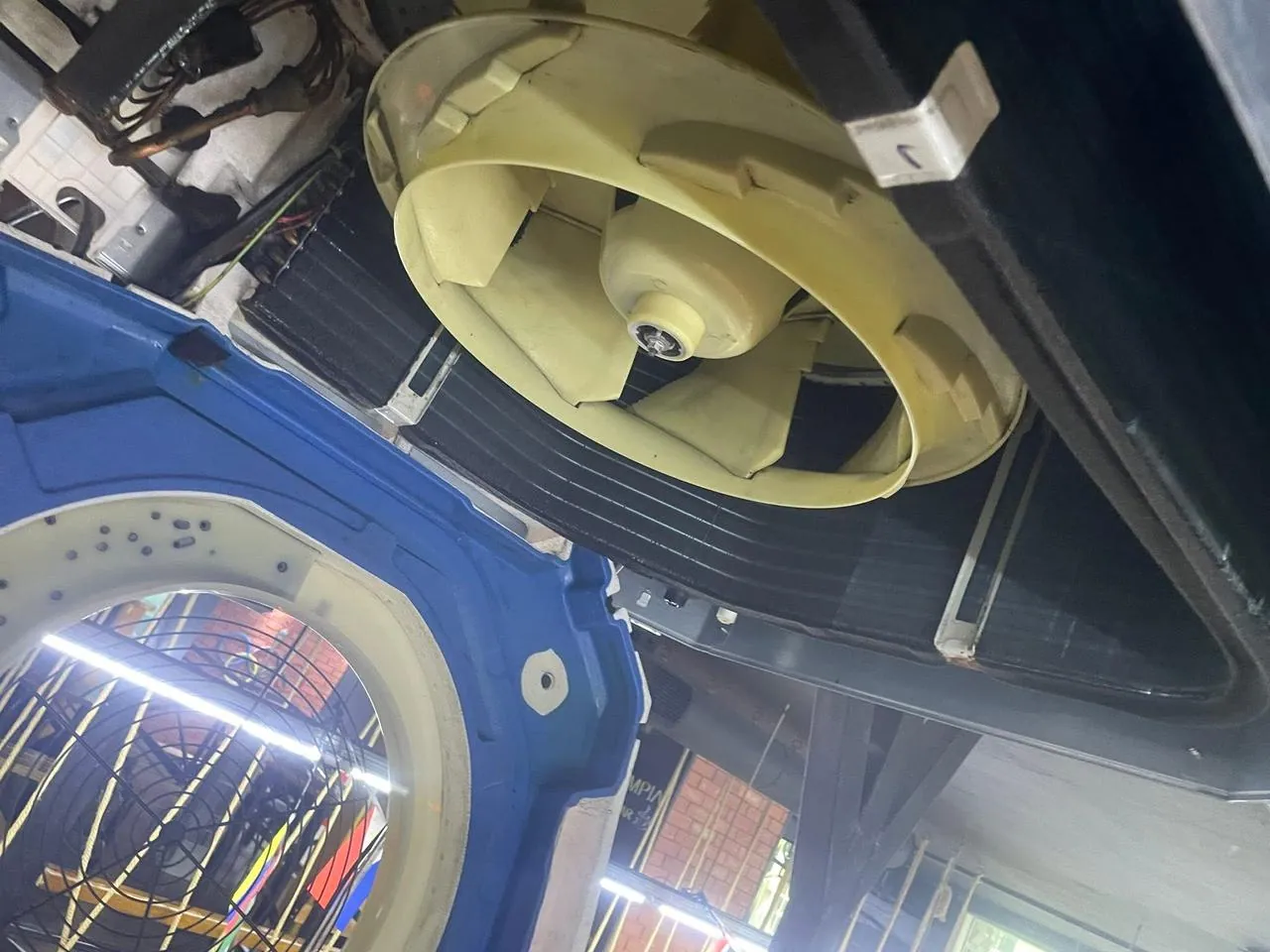
The lasting fix for the common musty smell is a full deep clean: filters, heat exchanger, blower drum, drain pan and casing all removed, washed and sanitised. Cassette units need their own chemical wash because the works sit deep in the ceiling housing. After that the air is fresh again.
To keep it away: rinse the filters every few weeks in summer, and run the fan-only mode for a few minutes before shutting down to dry the coil. Book a deep clean each spring and the smell won’t get a chance to return — we do exactly this across Batumi.
Frequently asked questions
Why does my air conditioner smell like vinegar or socks?
That sour, sock-like smell is bacteria and mould growing in the condensate that sits on the blower drum, coil and drain pan — sometimes called dirty-sock syndrome. Batumi humidity keeps those surfaces damp all season, which is exactly what the biofilm needs. A deep clean of the drum and pan removes it.
Is a smelly air conditioner bad for your health?
It can be. A fouled unit blows mould spores and bacteria into the room, which aggravates asthma, allergies and sinus problems — noticeably so in bedrooms and in offices where people sit under the unit all day. This is the practical reason an annual deep clean matters, not just airflow and running cost.
Will an air freshener or spray fix the smell?
No — it masks the smell for a day and leaves the biofilm growing. Sprays aimed into the vents also do not reach the drain pan and drum where the problem lives, and some corrode the coil. The fix is mechanical: strip, wash and antibacterially treat the drum, coil and pan, from 130 GEL.